
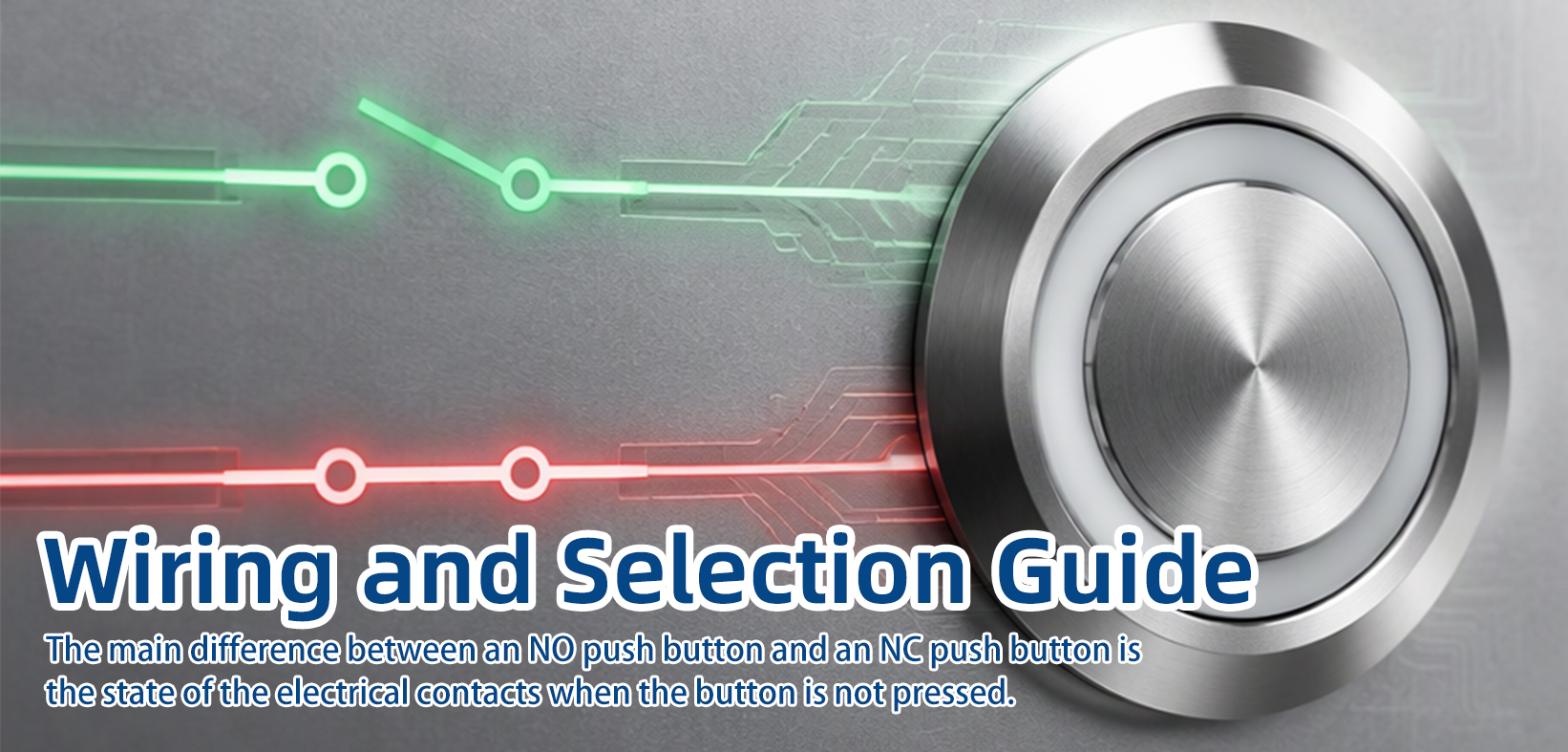
The main difference between an NO push button and an NC push button is the state of the electrical contacts when the button is not pressed. A normally open (NO) contact is open at rest and closes when pressed. A normally closed (NC) contact is closed at rest and opens when pressed. This guide explains the contact logic, wiring method, common applications and product selection points for industrial control panels and machinery.
Use an NO push button when pressing the button should start or trigger an action. Use an NC push button when pressing the button should stop or interrupt an action. If your circuit needs both switching paths, select a product with combined NO and NC contacts, such as a 1NO1NC configuration, where available.
What Is a Normally Open Push Button?
A normally open push button, commonly called an NO push button, keeps the electrical circuit open when it is in the normal, unpressed position. When the button is pressed, the contacts close and allow the control signal or current to pass through the circuit.
When the button is not pressed, the NO contacts remain separated and the circuit is open. Pressing the button brings the contacts together. The circuit then closes and sends a signal to the connected load, relay, PLC input or control system.
NO contact at rest
Open circuit. The load or input remains inactive until the button is pressed.
NO contact pressed
Closed circuit. The button sends a signal or allows the connected circuit to operate.
Button not pressed: Circuit open → Load or signal OFF
Button pressed: Circuit closed → Load or signal ON
Common Applications of NO Push Buttons
- Machine start buttons
- Motor activation controls
- PLC input triggering
- Relay activation
- Doorbells, call buttons and operator command buttons
- Industrial control panel inputs
What Is a Normally Closed Push Button?
A normally closed push button, commonly called an NC push button, keeps the electrical circuit closed when it is in the normal, unpressed position. Pressing the button opens the contacts and interrupts the current or control signal.
When the button is not pressed, the NC contacts remain connected and the circuit is closed. Pressing the button separates the contacts, opens the circuit and interrupts the connected load or control signal.
NC contact at rest
Closed circuit. The control signal continues during the normal condition.
NC contact pressed
Open circuit. The button interrupts the signal or stops the connected control function.
Button not pressed: Circuit closed → Control signal continues
Button pressed: Circuit open → Load or signal interrupted
Common Applications of NC Push Buttons
- Machine stop buttons
- Motor shutdown controls
- Reset and interrupt functions
- Fault detection and control circuit monitoring
- Stop inputs for machinery
- Safety-related control circuits
NC contacts are commonly used in stop and safety-related circuits. However, the safety performance of a complete system depends on the full circuit design, component selection, installation and applicable safety requirements. NC does not automatically mean that the complete system is safe.
NO vs NC Push Button: Quick Comparison
Use the table below for a fast selection. NO and NC describe the normal contact state; they do not describe whether the button is momentary or maintained.
| Feature | NO Push Button | NC Push Button |
|---|---|---|
| Full name | Normally Open | Normally Closed |
| Contact at rest | Open circuit | Closed circuit |
| Contact when pressed | Closes the circuit | Opens the circuit |
| Typical function | Start, activate or trigger | Stop, interrupt or reset |
| Common application | Start buttons, PLC triggers, relay activation | Stop buttons, shutdown controls, fault signals |
NO and NC Push Button Wiring
The wiring method depends on whether the control circuit should be open or closed in the button's normal state. Always confirm the terminal markings, rated voltage, rated current, load type and product wiring diagram before installation.
Basic NO Wiring Logic
Power supply (+)
       │
   NO contact
       │
     Load
       │
Power supply (-)
The circuit is open before the button is pressed. Pressing the button closes the NO contact and allows the circuit to operate.
Basic NC Wiring Logic
Power supply (+)
       │
   NC contact
       │
     Load
       │
Power supply (-)
The circuit is closed before the button is pressed. Pressing the button opens the NC contact and interrupts the circuit.
For a combined contact button: many push buttons use three switching terminals: C (common), NO (normally open) and NC (normally closed). Illuminated buttons may have additional lamp terminals. The number and position of terminals depend on the selected series and configuration.

Disconnect power before installation or maintenance. Do not rely on a generic diagram when the selected product's terminal layout or load differs. Use the actual datasheet or wiring diagram supplied for the model. See the CDOE push button wiring guide for additional terminal examples.
How to Choose NO or NC
Start with the action that should happen when the operator presses the button. Then verify the mechanical and electrical requirements of the equipment.
| If you need to... | Typical choice | Check before ordering |
|---|---|---|
| Start a machine when pressed | NO | Control voltage and start-circuit logic |
| Activate a relay or PLC input | Usually NO | Input logic and terminal wiring |
| Stop a machine when pressed | NC | Complete stop circuit and applicable safety requirements |
| Interrupt a control circuit | NC | Normal-state design and load type |
| Use one button for two switching functions | NO + NC / SPDT | C, NO and NC terminal arrangement |
| Keep the switched state after pressing | Maintained | Confirm the selected model supports latching operation |
NO/NC vs Momentary/Maintained: What Is the Difference?
NO and NC describe the electrical contact state. Momentary and maintained describe the mechanical operating behavior. They are different specifications and should not be used interchangeably.
| Term | What it describes |
|---|---|
| NO | Contact state when the button is not pressed |
| NC | Contact state when the button is not pressed |
| Momentary | The button returns after it is released |
| Maintained / Latching | The button stays in its switched position until operated again |
| SPDT | A contact arrangement that switches between two circuits |
Examples include a momentary NO push button, a momentary NC push button, a maintained NO/NC switch and an SPDT push button with COM, NO and NC terminals.
CDOE Industrial NO and NC Push Buttons
CDOE supplies push button solutions for control panels, machinery, automation equipment and custom electrical assemblies. The following examples show the types of contact configurations and operating options published for selected product series. Confirm the exact model code and technical documentation before ordering.
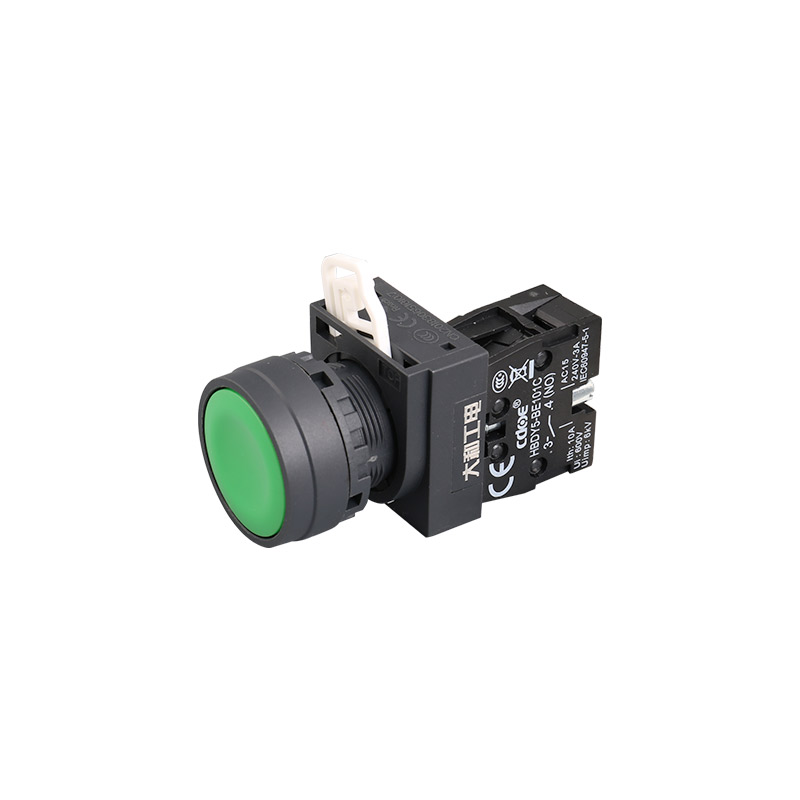
HBDY5-KA 22mm NO NC Push Button
Published contact configurations include 1NO, 1NC, 1NO1NC and 2NO2NC. The series is listed with momentary and latching operation.
Mounting hole: 22mm
Switch value: Ith 10A, UI 600V
Connection: Screw terminal
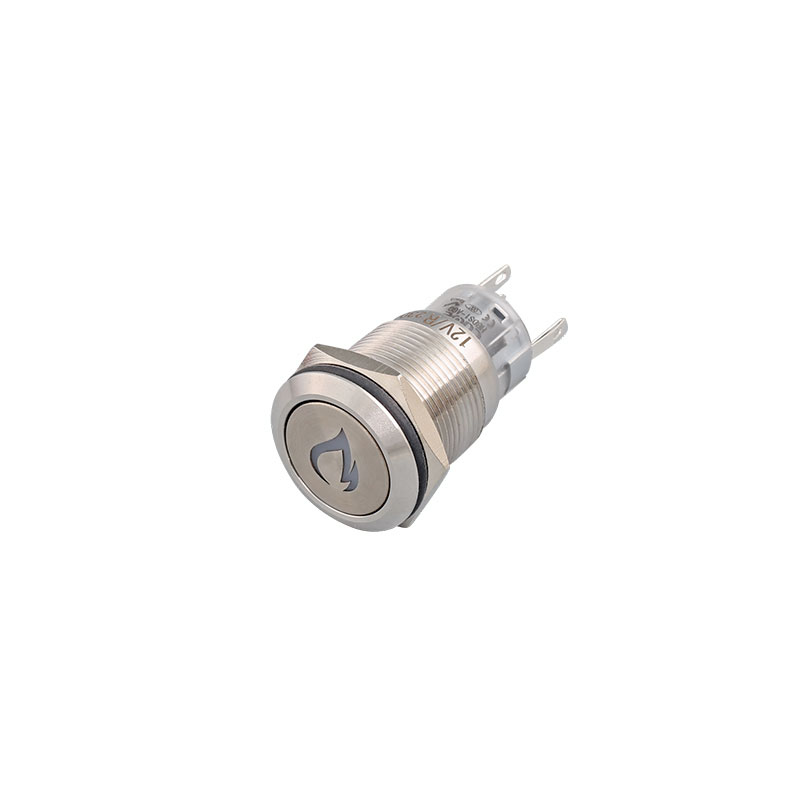
HBDS1-AGQ 19mm 1NO1NC Push Button
A metal push button series published with 1NO1NC or 2NO2NC configurations and momentary or latching operation.
Mounting hole: 19mm
Switch value: Ith 5A, UI 250V
Protection: IP67 listed for the series
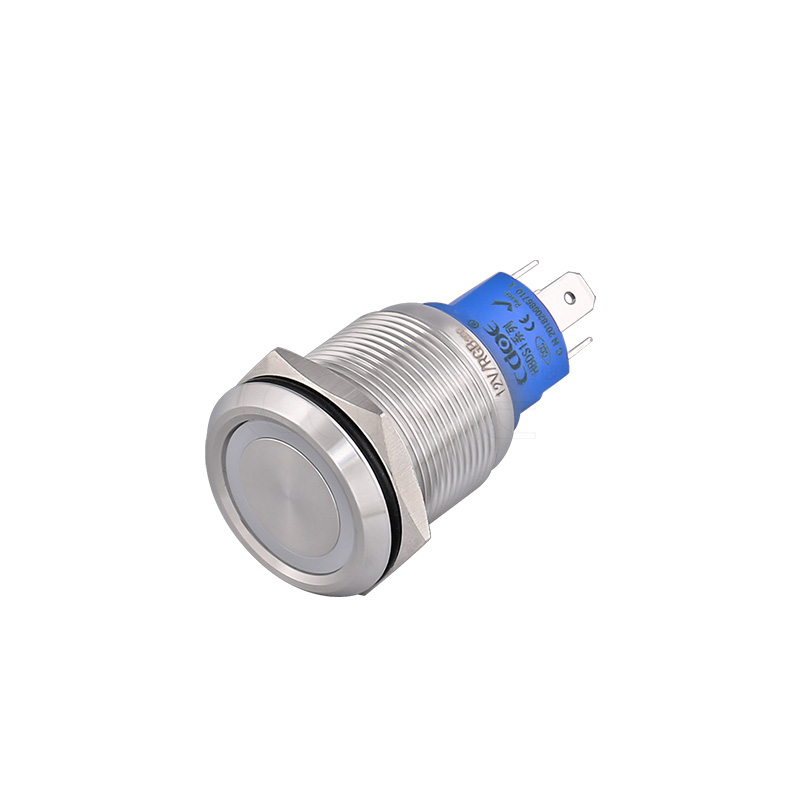
HBDS1-D22C 22mm 1NO1NC Push Button
A metal ring-LED series published with a 1NO1NC contact configuration and momentary or latching operation.
Mounting hole: 22mm
Switch value: Ith 5A (10A), UI 250V
Protection: IP67 listed for the series
Product specifications, rated values, protection grades and available contact modules vary by model. Use the linked product page and applicable technical documentation as the final reference before design or installation.
Frequently Asked Questions
Is NO or NC better for a push button?
Neither is universally better. NO is usually selected when pressing the button should start or trigger an action. NC is usually selected when pressing the button should stop or interrupt an action.
Should a start button be NO or NC?
A start button is commonly NO because the circuit should become active when the button is pressed. Confirm the control schematic and equipment requirements before installation.
Should a stop button be NO or NC?
A stop button is commonly NC because pressing it opens the circuit and interrupts the control signal. The complete control circuit must be designed and validated according to applicable requirements.
Can one push button have both NO and NC contacts?
Yes. Some push buttons use a contact block with both NO and NC terminals. This allows one button to control or monitor two switching paths.
Is a momentary push button usually NO or NC?
A momentary push button can be either NO or NC. Momentary describes how the button returns after release, while NO and NC describe the normal contact state.
What does COM mean on a push button?
COM means common terminal. In an SPDT configuration, the common terminal switches between the NO and NC terminals.
Are NO and NC push buttons interchangeable?
Not always. The correct contact type depends on the control logic, default circuit state, load and wiring design. Check the schematic and terminal markings before replacing a push button.
What should I check before buying an NO or NC push button?
Check the contact configuration, momentary or maintained operation, rated voltage, rated current, mounting hole size, terminal type, button style, illumination, environmental requirements and required quantity.
Request a Quote for Your NO or NC Push Button Requirements
Not sure whether you need an NO, NC or combined contact configuration? Send us your contact configuration, operation type, voltage, current, mounting hole size, application and quantity. The CDOE team will help identify a suitable push button solution and provide a quotation.